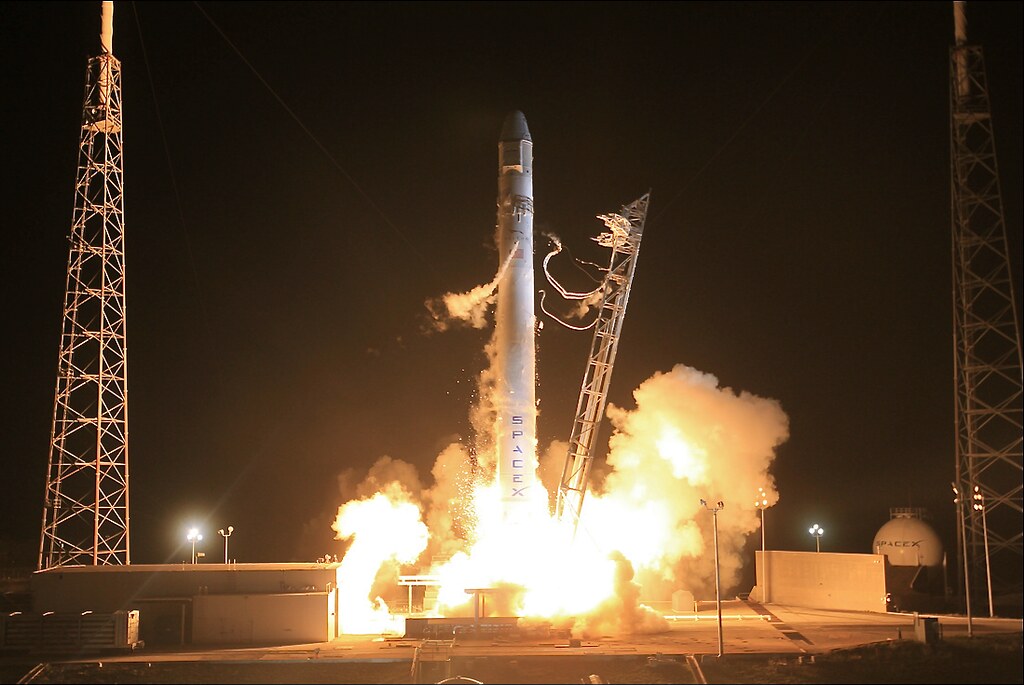
The Shenzhou-24 crewed spacecraft has successfully launched, showcasing China’s advancements in space technology. This mission is a testament to the nation’s commitment to exploring beyond Earth.
Overview of the Shenzhou-24 Mission
The recent launch of the Shenzhou-24 crewed spacecraft marks a significant milestone in China’s ambitious space exploration program. This mission aims to further enhance China’s capabilities in crewed spaceflight and research, showcasing the nation’s growing technological prowess.
The Shenzhou-24 mission is designed to accomplish several key objectives:
- Scientific Research: The spacecraft will enable astronauts to conduct a variety of experiments in microgravity, contributing to advancements in fields such as biology, materials science, and medicine.
- Technological Demonstration: The mission serves as a platform to test new technologies that can be utilized in future space endeavors, ensuring the safety and efficiency of crewed missions.
- International Collaboration: By sharing data and collaborating with other nations, China aims to foster a spirit of international cooperation in space exploration.
- Future Missions Preparation: The Shenzhou-24 will help lay the groundwork for upcoming missions, including potential manned expeditions to the Moon and Mars.
The successful launch of the Shenzhou-24 crewed spacecraft not only reflects China’s commitment to becoming a leader in space exploration but also demonstrates the potential for future innovations that could benefit humanity as a whole. As the mission progresses, the world will be watching closely to see the achievements that unfold in the coming days.
Significance of Crewed Spacecraft
The launch of the Shenzhou-24 crewed spacecraft marks a significant milestone in China’s ambitious space exploration program. This mission not only demonstrates China’s advancing technology but also highlights the country’s commitment to becoming a global leader in space endeavors.
The significance of crewed spacecraft lies in their ability to facilitate long-term human presence in space. With the successful launch of Shenzhou-24, China aims to enhance its capabilities in various areas:
- Scientific Research: Crewed missions allow for real-time experimentation and data collection, enabling scientists to conduct research that is not possible with unmanned missions.
- International Collaboration: As China continues to develop its space program, the Shenzhou-24 mission opens doors for potential partnerships with other nations, fostering a spirit of global cooperation in space exploration.
- Technological Advancement: The challenges of crewed space travel drive innovation in areas such as life support systems, spacecraft design, and safety protocols, which can have applications beyond space exploration.
- Public Interest: Successful crewed missions capture the imagination of the public, inspiring future generations to pursue careers in science, technology, engineering, and mathematics (STEM).
In conclusion, the Shenzhou-24 crewed spacecraft symbolizes not just a step forward in China’s space journey but also a crucial investment in the future of humanity’s exploration of the cosmos.
China’s Space Ambitions
China’s ambitions in space continue to expand, with the successful launch of the Shenzhou-24 crewed spacecraft marking another significant milestone. As the nation aims to establish a permanent presence in low Earth orbit, the Shenzhou program plays a crucial role in demonstrating China’s technological prowess and commitment to space exploration.
With a focus on long-term space habitation, the Shenzhou-24 mission is designed to support the construction and operation of the Tiangong space station, which is expected to be fully operational in the coming years. This ambitious project underscores China’s desire to become a leading player in global space endeavors.
Key objectives of the Shenzhou-24 mission include:
- Scientific Research: Conducting a variety of experiments in microgravity to advance knowledge in fields such as medicine, biology, and materials science.
- Technological Testing: Testing new technologies and systems that will be essential for future deep space missions.
- International Collaboration: Seeking potential partnerships with other nations to foster collaboration in space exploration.
As China progresses with its space program, the successful deployment of the Shenzhou-24 crewed spacecraft represents not only a leap for national pride but also a stepping stone toward ambitious endeavors beyond Earth. The mission reflects China’s vision of a future where it plays a significant role in the exploration of the universe.
Key Features of Shenzhou-24
The Shenzhou-24 crewed spacecraft is equipped with several key features that enhance its performance and operational capabilities, marking a significant advancement in China’s space exploration efforts.
- Advanced Navigation Systems: The spacecraft utilizes state-of-the-art navigation technology, ensuring precise trajectory control. This allows for smoother docking procedures with space stations.
- Life Support Systems: Shenzhou-24 is designed with improved life support systems that provide astronauts with a sustainable environment for extended missions, managing air quality and water recycling efficiently.
- Enhanced Communication: The inclusion of upgraded communication systems enables real-time data transmission between the crew and mission control, facilitating better coordination and safety during missions.
- Robust Safety Features: Safety is a priority in the design of Shenzhou-24, with multiple redundancies built into critical systems to ensure crew protection during launch and re-entry operations.
- Modular Design: The modular architecture of the spacecraft allows for easier upgrades and adaptations for future missions, making it a versatile platform for various scientific experiments.
These features position the Shenzhou-24 crewed spacecraft as a pivotal component in China’s ongoing quest for leadership in space exploration, as it embarks on missions that will further our understanding of the cosmos.
Previous Shenzhou Missions
The Shenzhou program, which translates to “Divine Vessel,” has been a cornerstone of China’s ambitions in crewed space exploration. Since its inception in 1999, the program has successfully launched several missions that have contributed to the development of China’s space capabilities.
Among these missions, Shenzhou-1 marked the beginning of the program, launching an uncrewed spacecraft that orbited the Earth and confirmed the technology needed for future crewed flights. Following this, Shenzhou-2 became the first mission to carry a crew, with its successful return paving the way for subsequent manned missions.
Shenzhou-3 through Shenzhou-5 further refined spacecraft technology and introduced important systems such as life support and safety protocols. Notably, Shenzhou-5 made history in 2003 when it carried astronaut Yang Liwei into space, making him China’s first human in orbit.
The advancements continued with Shenzhou-6, which emphasized crew operations and teamwork in space. Following that, Shenzhou-7 featured China’s first spacewalk, showcasing the country’s growing expertise in space missions.
The most recent missions, including Shenzhou-13 and Shenzhou-14, have focused on constructing the Tiangong space station, illustrating the program’s evolution and its critical role in the ongoing development of the Shenzhou-24 crewed spacecraft.
International Reactions to the Launch
The successful launch of the Shenzhou-24 crewed spacecraft has garnered significant international attention and reactions from various countries and space agencies. Experts around the globe have acknowledged the implications of this mission for China’s space exploration ambitions.
Many nations have expressed admiration for China’s rapid advancements in space technology. According to a statement from the European Space Agency, the launch highlights China’s commitment to expanding its presence in space. They noted that the Shenzhou-24 mission reflects a growing trend of international collaboration in space exploration, emphasizing the importance of sharing knowledge and experiences.
In the United States, NASA officials congratulated the Chinese space program on their launch success. They remarked that while they compete in certain areas, there are also opportunities for cooperation, especially in scientific research and planetary exploration.
Some analysts, however, have raised concerns regarding the geopolitical implications of China’s increasing prowess in space. A report from a leading think tank highlighted that the Shenzhou-24 crewed spacecraft could potentially enhance China’s strategic capabilities, prompting discussions about space security among global powers.
Overall, the launch of Shenzhou-24 has sparked a mix of admiration and caution, underscoring the dual nature of technological progress in the sphere of international relations.
Future Plans for Chinese Space Exploration
As China propels itself into a new era of space exploration with the recent launch of the Shenzhou-24 crewed spacecraft, its future plans are becoming increasingly ambitious. The nation aims to establish a permanent presence in low Earth orbit by expanding its Tiangong space station, which will serve as a hub for scientific research and international collaboration.
Chinese officials have outlined several key objectives for the upcoming years:
- Expansion of the Tiangong Space Station: China plans to complete the construction of the Tiangong space station by 2024, allowing for more extensive experiments in microgravity.
- Moon Missions: The Chinese National Space Administration (CNSA) is preparing for its first crewed lunar mission, targeting the late 2020s. This mission will explore the Moon’s south pole region, an area rich in resources.
- Mars Exploration: Following the success of the Tianwen-1 mission, China envisions sending a crewed mission to Mars within the next decade, focusing on surface exploration and potential colonization.
- International Collaboration: China aims to foster partnerships with other countries for joint missions, sharing knowledge and resources to enhance space exploration efforts.
With the Shenzhou-24 crewed spacecraft serving as a cornerstone of its advancements, China is set to make significant strides in its quest for greater understanding of the universe.
Challenges Ahead for Space Missions
As China embarks on its ambitious journey with the Shenzhou-24 crewed spacecraft, it faces several challenges that could impact the success of future space missions. The complexity of crewed spaceflight operations requires meticulous planning and execution, as any misstep can lead to significant setbacks.
One major challenge is ensuring the safety and well-being of the astronauts aboard. The harsh conditions of space, including radiation exposure, microgravity effects, and psychological stress, demand robust life support systems and rigorous training for crew members. Additionally, the spacecraft must be equipped to handle emergencies, requiring advanced technology and engineering solutions.
Another hurdle is the need for continuous innovation in space technology. As missions grow in duration and complexity, the demand for reliable propulsion systems, communication networks, and resource management increases. China must invest in research and development to stay competitive in the global space race.
Moreover, public interest and international collaboration play a crucial role in the success of space missions. Maintaining transparency and fostering partnerships with other nations can enhance knowledge sharing and technical expertise.
Moving forward, China will need to navigate these challenges diligently to ensure the success of the Shenzhou-24 crewed spacecraft and its future explorations, aiming for milestones that contribute not only to national pride but also to the broader goals of humanity in space exploration.