

Most packaging equipment decisions are reversible. A tape gun that does not suit the line gets replaced, and the cost is the purchase price. A water activated tape machine is harder to swap out, because it brings a water system, a feed mechanism, and a maintenance routine into the packing area all at once. Getting the choice right the first time saves far more than the price difference between models.
Air Power Pak’s range spans four operating styles. Rather than ranking them from basic to advanced, it helps to understand what each one assumes about the operation using it — because the wrong assumption is what produces an unused machine.
The Assumption Behind Each Model
The GHC-50 handheld unit assumes mobility. It weighs roughly 330 g, carries an 80 ml reservoir and a moistening brush, supports 50 mm tape width and roll diameters up to 140 mm, and needs no power connection. It is designed for standard non-reinforced kraft tape. The assumption is that cartons are sealed in different places during a shift — at a packing table, beside a pallet, on a cart. The cost of that mobility is that moisture transfer depends on operator technique: a steady pull wets the adhesive evenly, a hurried pull leaves dry patches.
The NT-800 lever bench unit assumes standardization. It supports widths from 20 to 100 mm, custom lengths to 1000 mm, and roll diameters to 200 mm, with one water fill covering roughly 100 to 200 standard cartons. The operator sets a length and pulls a lever; the machine feeds, moistens, and cuts. This assumes the operation wants consistent tape length across shifts but does not need electronics to get there. It is the model most often misjudged in specification — buyers sometimes expect automatic length selection and find the operator controls it. Where inconsistent length was the original problem, that control is the fix.
The NT-AT 3.0 assumes throughput. It dispenses at 60 m/min, holds a 3.5 L tank, and runs below 75 dB at shutoff. The larger tank reduces mid-shift refills, which is where moisture consistency tends to drift. The assumption is repetitive, higher-volume sealing where the manual pull has become a physical limit.
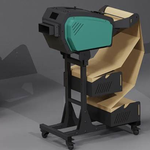
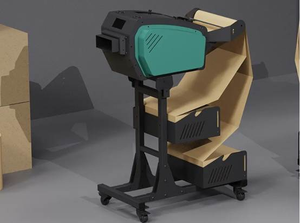
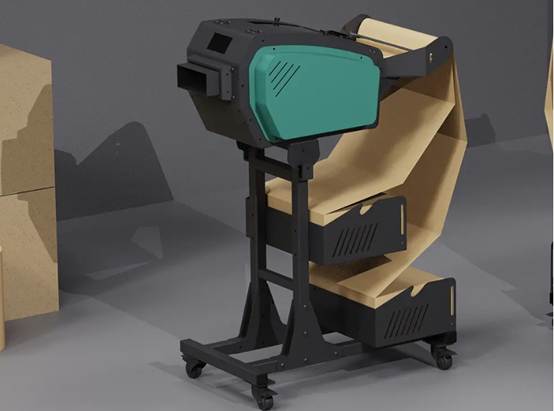
The Tape-AT assumes hands-free operation. It triggers on hand proximity, dispensing at an average 60 m/min with a 2.5 L tank and adjustable water temperature from 0 to 80°C. The 45-degree case angle is set to reduce shoulder strain during long shifts. The assumption is specific: an operator holding a carton steady with one hand who cannot comfortably press a button with the other.
The Detail That Decides Seal Quality
Machine speed gets attention; moisture consistency deserves it. A dispenser that wets one edge of the tape more heavily than the other produces corner lift-offs regardless of dispensing speed or tank capacity.
This is why the verification step matters more than any specification. Seal a dozen cartons with a new machine and inspect them after the adhesive has fully dried — several hours, or overnight for a proper check. Look for even darkening across the tape width, no pale dry patches along either edge, and corners that stay down when the flap is flexed. The same test reveals a ragged blade, which tears tape during application and creates a weak point at the seam.
Warm water helps starch adhesive activate faster, which is why adjustable temperature has practical value in an unheated warehouse in winter and less in a climate-controlled packing room.
The Accessory That Removes Guesswork
The UM-CJ01 tape length detector measures a carton placed near it and calculates the required tape length, with detection distance from 3 to 200 cm and accuracy within 1 cm. It is compatible with the NT-ATv2.0. Manual length estimation causes two losses that rarely show up in a cost report: tape cut short, requiring a second piece that weakens the seal, and tape cut long, wasting material on every carton. The second accumulates quietly across thousands of cartons.
The Volume Question
The honest threshold is cartons per shift on the busiest day, not the weekly average. A steady, moderate count is workable with the NT-800, which needs less maintenance attention and no power planning. Operations sealing in the thousands per day will find the manual lever becomes a physical constraint before a shift ends, which is where the NT-AT 3.0 or Tape-AT justifies its cost. Buying capacity ahead of actual volume adds maintenance burden without adding throughput.
Maintenance That Protects the Investment
Rinse the moistening brush weekly to clear dust and adhesive residue. Empty the tank before extended idle periods to avoid stagnant water and odor. Clear paper scraps from the blade area, since fragments misalign cuts. On machines with adjustable temperature, confirm the setting suits the season — a summer setting can over-warm water in an already warm room. On manual units, teach the pull rhythm explicitly, because new operators tend to pull too fast and the resulting dry patches are invisible until the cartons are already in transit.
For Distributors and Resellers
A water activated tape machine is one part of a sourcing decision. Spare parts availability, warranty terms, and OEM/ODM flexibility determine whether a product line stays viable after the first order. Air Power Pak offers customization on selected models, including logo printing and body color, with minimum order quantities and lead times that vary by model and project requirements. Sourcing machines and compatible kraft tape from one supplier simplifies matching, but tape specifications should be confirmed before bulk orders are placed.
The sequence holds regardless of volume: confirm tape width and roll diameter, count cartons on the busiest shift, test dried seals on real cartons, then select the operating style that matches the floor.